From Martyrdom to Authority: The Continuation of the Martyred Leader's Path in the New Order of West Asia
Title: The Blood of Prudence – A Strategic Analysis of the Martyred Leader's Role in the Formation and Sustainability of the Resistance Geometry
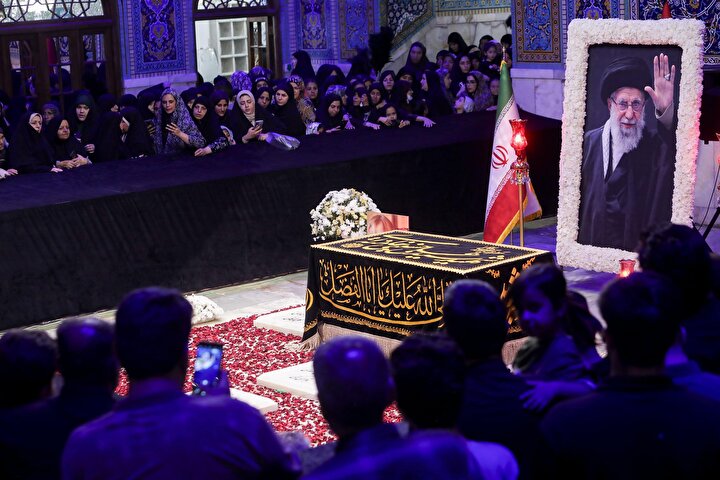
The martyrdom of Grand Ayatollah Khamenei was not the end of an era; rather, it marked the beginning of a new chapter in the power dynamics of the Middle East. What the Zionist regime and the United States, through their miscalculations, termed "the end of Iran" proved, in practice, to be the "rebirth and greater empowerment" of the Resistance Axis. The martyred Leader, through strategic foresight, created a system that, even with the physical elimination of its leader, did not collapse but transformed into an institutionalized, enduring, and people-based deterrent structure.
Introduction: Beyond a Person, the Embodiment of a System of Thought
In the history of global political transformations, it is rare to find a leader whose martyrdom does not signify the end of a period but rather initiates a new leap in the structure of the power he represented. Typically, the physical removal of the commander-in-chief leads to the collapse or at least the destabilization of that system. However, what transpired with the martyrdom of Grand Ayatollah Shahid Seyyed Ali Hosseini Khamenei at the hands of the terrorist and occupying Zionist regime was a historical exception and a strategic miracle. This exalted martyr was not merely the leader of a nation but the architect of a coherent intellectual system known as "Resistance" – a system so firmly grounded in faith and self-belief, under his precise foresight and supreme prudence, that his pure blood served as water for the roots of this blessed tree, yielding fruit more powerful than ever before. This article endeavors, with a scientific and strategic perspective, to analyze the unparalleled role of the martyred Leader in guiding, systematizing, and ensuring the continuity of the Resistance Axis.
1. Supreme Prudence: From Threat Anticipation to the Architecture of a Resilient System
Strategic leadership in political thought is defined by two core components: "foresight" and "designing structures appropriate for the future." The martyred Leader of the Islamic Revolution was exceptional in both domains. From the very early days of his leadership in 1989, he had well understood that the hostility of global arrogance toward the Iranian nation was not a transient confrontation but a long-term civilizational war aimed at erasing the Islamic identity and independence of the country. Hence, his grand strategy rested upon two pillars:
a) Institutionalizing the Culture of Resistance and Sacrifice as the Driving Fuel of Society:
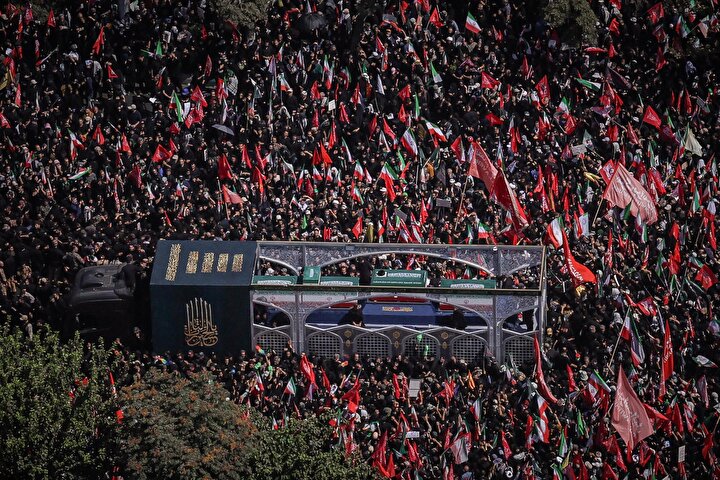
Through the continuous elaboration of the concepts of "Greater Jihad" and "Active Resistance," the martyred Leader safeguarded Iranian society from the affliction of "passivity" and "submission." In a meeting with members of the Assembly of Experts, he stated: "The resistance of the Iranian nation, the steadfastness of nations, and standing against arrogance... render the enemy's pressures ineffective." This belief in resistance was not merely a moral recommendation but a strategic doctrine for survival. By transforming the concept of "martyrdom" into a "school of thought," he ensured that the physical elimination of commanders would not create a fissure in the collective will. This supreme prudence bore fruit in the epic and million-strong funeral of General Soleimani and the continuation of his path.
b) Engineering Robust and Self-Healing Power Structures:
The martyred Leader's awareness of the possibility of his own assassination was not a guess but a precise intelligence and strategic analysis. Aware of this threat, he designed the system of the Islamic Republic in such a way that the "Leader" constitutes an "institution," not a "person." By strengthening the position of the Guardianship of the Jurist (Velayat-e Faqih) as a transpersonal principle in the Constitution and delegating extensive authority to institutions rooted in the people (such as the Islamic Revolutionary Guard Corps and the Basij), he arranged the system so that in his physical absence, it would not only suffer no power vacuum but the sacred anger and motivation of the nation would transform into an even more powerful driving force for the system. Western analysts, too, after his martyrdom, acknowledged that "the Tehran regime was designed in a way to prevent a governance vacuum." This exemplifies the pinnacle of leadership art and the divine prudence of a man of God.
2. The Martyred Leader's Power in Creating a New Regional Order (Resistance Axis)
The power of the martyred Leader cannot be defined solely within Iran's geographical borders. His true power manifested in the creation of a cross-border deterrence doctrine known as the "Resistance Axis." This axis stands as his greatest strategic achievement in the realms of foreign policy and national security. With a deep understanding of the structural weaknesses of the Zionist enemy and its Western backers, he united a network of popular forces and aligned governments in Lebanon, Palestine, Iraq, and Yemen around a single objective: the expulsion of occupiers and the rejection of foreign domination.
This network, which in his words, "will encompass the entire expanse of the region," was formed on the basis of three empowering pillars:
Ideological Authority of the Leadership: As the intellectual and spiritual reference of this front, he guaranteed its divine and popular legitimacy.
Logistical Coordination of the IRGC: Under the Supreme Commander-in-Chief, the Quds Force of the IRGC became the executive arm for empowering regional allies.
Geographical and Human Connectivity: Through Syria and Iraq, a continuous corridor of resistance was established.
The key point in this power architecture was its grassroots nature and the self-reliance of its components. By nurturing commanders such as General Soleimani, the martyred Leader ensured that this network would continue to thrive after him. The martyrdom of General Soleimani, by the Leader's order, did not weaken this network but, as acknowledged by both friend and foe, transformed it into a "school of thought." This was precisely the supreme prudence that guaranteed that the physical elimination of the Leader would not undermine the continuity of this strategy.
3. Martyrdom: The Beginning of the Surge of Blood in the Veins of History
In the divine and Qur'anic perspective, martyrdom is not the end of the path but the beginning of eternity and a renewed surge: "And never think of those who have been killed in the cause of Allah as dead. Rather, they are alive with their Lord, receiving provision." The accursed Zionist regime and its American backers, with their materialistic and worldly calculations, imagined that by striking the commander of this great movement, they could, in their own words, "collapse the command and control structure of the Resistance Axis." But the blood of this exalted martyr overturned their calculations.
a) Transformation of the Leader into a Global Ideal:
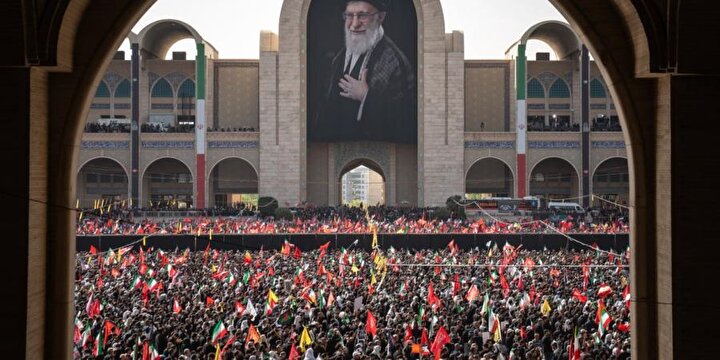
His oppressed martyrdom elevated his name and creed from a "national figure" to a "global symbol of resistance against oppression." The overwhelming wave of anger and sympathy that swept across the Islamic world and beyond demonstrated that the enemy had gravely miscalculated the "soft power of the Leader." This blood drew millions of previously indifferent people into the ranks of resistance.
b) Increased Motivation and Cohesion in the Resistance Front:
In the literature of political sociology, the martyrdom of a movement's leader, if that movement possesses solid intellectual foundations and popular structures, leads to "increased legitimacy" and "peaceful radicalization of goals." The martyred Leader's prudence in creating impersonal, faith-based structures precisely yielded such a result. Today, the Resistance Front continues its path with renewed motivation and the slogan "Severe Revenge."
c) Proof of the Righteousness of the Path:
The martyrdom of a leader who always defended the oppressed and stood against the excesses of arrogance serves as an undeniable testament to the righteousness of his path and the falsity of the enemies' path. This martyrdom further exposed the true face of the false claimants of human rights and peace to the world.
Continuation of the Path with Greater Strength
The martyred Leader of the Islamic Revolution, Grand Ayatollah Shahid Seyyed Ali Hosseini Khamenei, was a perfect example of a divine leader in the modern era. By combining "profound faith" with "supreme prudence," he not only guided a political system through the most perilous turns of history but also established a new geometry of power in West Asia, in which the will of nations supersedes wealth, coercion, and deception. Although his martyrdom is an irreparable loss for the Islamic Ummah, owing to that same prudence and far-sightedness, it became a turning point in the history of resistance. The pure blood of this beloved martyr has irrigated the mighty tree of resistance, and today, the world witnesses that this blessed tree stands stronger and more fruitful than ever against the storms of the enemy. The divine promise is true, and ultimate victory, as that righteous servant of God had foreseen, belongs to the Resistance Front and the oppressed of the world.